Golf Swing Analyzers: A Comprehensive Guide

*We may earn a commission for purchases made using our links. Please see our disclosure to learn more.
In the quest for golf perfection, technology has become every player’s trusted companion. Golf swing analyzers have transformed from expensive luxury items into essential tools for players seeking to understand and improve their mechanics. These sophisticated devices offer immediate feedback and actionable insights, helping golfers of all skill levels identify flaws and make meaningful adjustments to their technique.
Key Takeaways
- Golf swing analyzers provide data-driven insights that can significantly improve your game by identifying specific areas for improvement
- Modern analyzers range from simple clip-on sensors to comprehensive systems combining sensors and video analysis
- Key metrics to look for include club path, face angle, swing speed, tempo, and attack angle
- Prices range from around $100 for basic models to $500+ for professional-grade systems
- Regular practice with analyzer feedback leads to more consistent technique and lower scores over time
“Technology in golf is no longer just about equipment—it’s about understanding your personal mechanics. Swing analyzers give average players access to the same insights that were once reserved for tour professionals.”
— Butch Harmon, Legendary Golf Coach
Top Golf Swing Analyzers
After extensive research and testing, here are four outstanding golf swing analyzers that deliver excellent performance and value:
1. Arccos Caddie Smart Sensors

Take your golf game to the next level with the Arccos Caddie Bundle, featuring 14 ultra-light smart sensors and a one-year subscription to the award-winning Arccos Caddie app. This fully-automatic performance tracking system is trusted by golfers worldwide and recognized by Golf Digest as a top-tier game analyzer. Each club sensor, including the compact P3 putter sensor, tracks every shot effortlessly and transmits real-time data to your phone via Bluetooth. With hands-free data capture, improved microphone protection, and a secure clip design, this bundle provides a sleek, reliable, and high-tech solution to help lower your score and improve your strategy.
- Automatic Tracking: No manual input needed—just swing and the system does the rest.
- Lightweight Design: Sensors are small, sleek, and unobtrusive on your clubs.
- Award-Winning App: Includes a free one-year subscription to the Arccos Caddie app for real-time insights.
- High Initial Cost: Premium price tag may not suit casual golfers.
- Subscription Required: App access must be renewed after the first free year.
- Bluetooth Dependent: Requires a compatible smartphone for real-time functionality.
The Arccos Caddie system consists of 14 ultralight sensors that screw into the end of each club grip. These sensors automatically track and analyze every shot you take, providing detailed insights via a smartphone app. What sets Arccos apart is its AI-powered caddie feature that uses your personal data to recommend club selection and strategy.
2. Garmin Approach R10 Launch Monitor
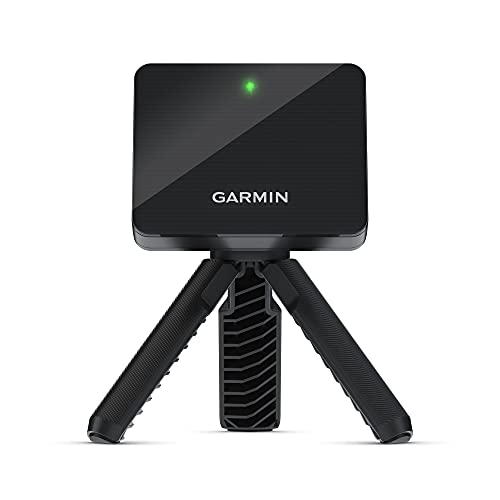


Elevate your golf game anywhere with the Garmin Approach R10, a portable and powerful launch monitor designed for both home use and the driving range. This compact device tracks essential swing metrics—like club head speed, ball speed, launch angle, and ball spin—helping you gain deeper insights into your performance. Paired with the Garmin Golf app, it provides video analysis, virtual rounds on over 42,000 global courses, and weekly tournaments. With up to 10 hours of battery life and a waterproof design, the R10 is the ideal training companion for serious golfers looking to improve swing consistency and accuracy.
- Comprehensive Metrics: Tracks key performance stats to help fine-tune your swing.
- Virtual Course Play: Access 42,000+ courses and global tournaments via the Garmin Golf app.
- Portable & Durable: Compact, waterproof design with 10-hour battery life.
- App Subscription Needed: Full features require an active Garmin Golf subscription.
- Accuracy Margins: Slight variances in tracking (+/- 1-3 mph or degrees) may impact precision for advanced users.
- Requires Smartphone: Needs compatible device and app for full functionality.
The Garmin Approach R10 is a portable launch monitor that delivers professional-level metrics at a fraction of the cost of commercial systems. It tracks over 12 swing parameters including club head speed, ball speed, spin rate, and launch angle. The device pairs with the Garmin Golf app, offering virtual rounds on more than 42,000 courses and providing comprehensive performance analysis.
3. Blast Motion Golf Swing Analyzer


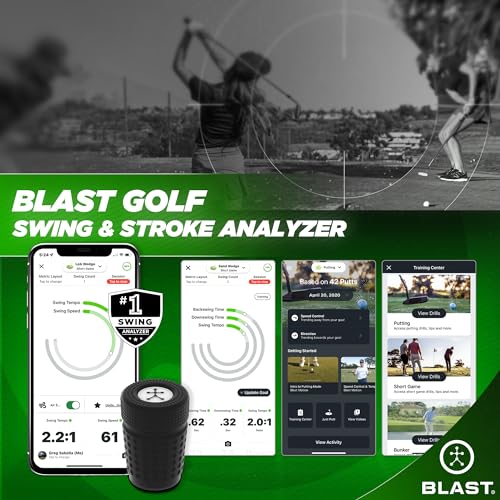
Improve your golf game from tee to green with the Blast Golf Swing & Stroke Analyzer (Gen3). This compact and powerful training tool delivers real-time feedback on swing tempo, speed, and path through the Blast Golf app. Whether you're practicing your full swing or fine-tuning your putting stroke, the system captures and clips video highlights with overlaid metrics for easy review. Designed for year-round use, the Air Swings mode allows you to train without a ball—anytime, anywhere. Trusted by professionals and coaches, Blast Golf helps you develop consistency, control, and confidence to lower your scores.
- Real-Time Feedback: Instantly receive swing data and video clips to guide improvement.
- Short Game Focus: Advanced insights help refine putting and tempo for scoring gains.
- Train Anywhere: Air Swings mode enables ball-free practice in any setting.
- App Dependent: Requires smartphone and Blast app for full functionality.
- Limited Full Swing Metrics: Focus is stronger on short game than complete launch data.
- No Ball Required—But Optional: While convenient, some users may prefer ball-based feedback.
The Blast Motion sensor attaches to the end of your club grip and pairs with a smartphone app to deliver real-time swing metrics. This lightweight device focuses heavily on putting and full-swing tempo analysis, helping golfers develop consistent timing and rhythm. The system includes video capture capabilities with automatic clip editing and metric overlays.
4. Rapsodo Mobile Launch Monitor


The Rapsodo MLM2PRO Mobile Launch Monitor + Golf Simulator brings professional-grade performance tracking to your fingertips. Featuring dual optical camera vision and radar processing, this device delivers precise swing data, including 13 metrics such as spin rate and spin axis. With the new Target Range Play mode, you can practice on 72 unique target distances and four fairway targets. Enjoy simulation on over 30,000 golf courses and two virtual ranges. The included Shot Vision and Impact Vision allow for multiple swing replays, making it perfect for detailed analysis. Whether you're at home or on the course, the MLM2PRO is an essential tool for improving your game.
- Precise Data: Dual-camera vision and radar for accurate swing metrics.
- Extensive Golf Simulations: Play on 30,000+ courses and practice with 72 target distances.
- Swing Replay Features: Shot Vision and Impact Vision for multi-angle swing analysis.
- High Price Point: Premium features come with a premium cost.
- Requires Mobile Device: Full functionality needs a smartphone and Bluetooth connection.
- Limited Virtual Range Options: The two virtual ranges may feel restrictive for advanced users.
The Rapsodo MLM combines the power of your smartphone’s camera with sophisticated radar technology to deliver comprehensive swing and ball flight data. This device offers shot tracing, video playback, and club performance analysis, helping golfers understand which clubs perform best in their bag. The system also provides shot dispersion patterns and GPS-mapped shot tracking.
Understanding Golf Swing Analyzer Technology
Golf swing analyzers utilize various technologies to capture and analyze your swing mechanics. Understanding these technologies can help you choose the right analyzer for your needs:
Sensor-Based Systems
Sensor-based analyzers attach directly to your club or glove and use accelerometers, gyroscopes, and magnetometers to track your swing path and club position throughout the swing. These devices excel at capturing tempo, swing speed, and the overall plane of your swing.
The primary advantage of sensor-based systems is portability and ease of use. They require minimal setup and can be used virtually anywhere. However, they may lack the visual feedback that some golfers prefer and might not capture the finest details of face angle at impact.
Launch Monitors
Launch monitors use radar or camera technology to track both the club and ball during the swing and impact. These devices provide comprehensive data on both swing mechanics and ball flight, including launch angle, spin rate, and projected distance.
Launch monitors typically offer the most complete picture of your swing and its results but often come with a higher price tag and more complex setup requirements. They represent the gold standard for serious players looking for the most accurate and detailed feedback.
Video Analysis Systems
Video analysis systems use your smartphone or tablet camera to record your swing, then apply software tools to analyze the footage. Many modern analyzers combine video capture with sensor data for a comprehensive analysis.
The advantage of video-based systems is the ability to visually confirm what the data suggests. Seeing your actual swing alongside the metrics helps many golfers better understand the adjustments needed.
Key Metrics to Understand
Modern golf swing analyzers track numerous metrics, but understanding which ones matter most can help you focus your practice efforts:
Club Head Speed
Measured in miles per hour (mph), club head speed is a primary factor in how far your ball will travel. Average amateur golfers typically generate speeds between 80-90 mph with a driver, while tour professionals often exceed 110 mph.
Improving club head speed requires a combination of proper technique, flexibility, and sometimes strength training. Your analyzer can help you experiment with different swing approaches to find what generates optimal speed for your physique.
Face Angle
Face angle refers to the direction your clubface is pointing at impact, measured in degrees open (pointing right of target for right-handed golfers) or closed (pointing left). Even minor variations in face angle can significantly affect ball direction.
Most amateur golfers struggle with consistency in face angle control. Using your analyzer to identify patterns in your face angle at impact can lead to dramatic improvements in accuracy.
Swing Path
The swing path metric indicates whether your club is moving from outside-to-inside (creating a cut or slice path), inside-to-outside (creating a hook path), or directly along the target line at impact.
The ideal swing path varies based on your desired shot shape, but consistency is crucial. Your analyzer can help you understand your natural tendencies and work toward either neutralizing an extreme path or consistently controlling it.
Attack Angle
Attack angle measures the up or down direction of the clubhead at impact. A positive attack angle (hitting up on the ball) is generally desired with a driver, while a slightly negative angle (hitting down) works better with irons.
Understanding your attack angle can help optimize launch conditions for maximum distance and control with different clubs.
Tempo
Swing tempo refers to the timing ratio between your backswing and downswing. PGA Tour studies have shown that regardless of swing speed, most successful golfers maintain a consistent tempo ratio around 3:1 (backswing takes about three times longer than downswing).
Monitoring and improving your tempo can lead to more consistent contact and better overall control of your ball flight.
How to Effectively Use Your Golf Swing Analyzer
Purchasing an analyzer is just the first step, learning to use it effectively is where the real value emerges:
Establish Your Baseline
Before attempting any changes, use your analyzer to establish your current baseline metrics. Take 10-15 swings with various clubs and record the data. This gives you a starting point to measure improvement and helps identify your most significant issues.
Focus on One Change at a Time
The most common mistake golfers make is trying to change too many aspects of their swing simultaneously. Pick the single most impactful issue your analyzer identifies and work exclusively on that aspect until you see improvement.
Practice Deliberately
Rather than mindlessly hitting balls, use your analyzer to set specific practice goals. For example, if you struggle with an open clubface, set a goal of completing 20 swings with the face square at impact (±2 degrees).
Combine Analyzer Data with Professional Instruction
While analyzers provide valuable data, interpreting that data and making appropriate technical adjustments often benefits from professional guidance. Consider sharing your analyzer data with a teaching professional who can help you understand the cause-and-effect relationships in your swing.
Track Progress Over Time
Most analyzer apps allow you to save and track your data over time. Review your progress every few weeks to ensure you’re moving in the right direction. This data-driven approach helps maintain motivation and provides objective proof of improvement.
Benefits of Regular Analyzer Use
Golfers who consistently use swing analyzers as part of their practice routine typically experience several benefits:
Accelerated Improvement
The immediate feedback loop created by swing analyzers helps golfers make adjustments more quickly than traditional trial-and-error methods. This accelerated feedback cycle can compress the learning curve significantly.
Greater Consistency
Understanding the specific mechanics that produce your best shots allows you to reproduce them more consistently. Over time, this leads to smaller shot dispersions and more predictable ball flight.
Customized Equipment Selection
The data from your analyzer can help identify the optimal club specifications for your swing. This might include shaft flex, club length, lie angle, and even grip size—all factors that can significantly impact performance.
Objective Progress Tracking
Golf improvement can sometimes feel subjective, with progress coming in fits and starts. An analyzer provides objective data to confirm that you’re making real progress, even when the results haven’t fully materialized on the course.
Enhanced Practice Efficiency
Instead of blindly hitting balls, analyzer feedback helps you focus your limited practice time on the specific aspects of your swing that will yield the greatest improvement.
Conclusion
Golf swing analyzers have democratized access to the kind of technical feedback once available only to tour professionals. By providing objective data on the mechanics of your swing, these devices can help accelerate improvement, increase consistency, and ultimately lower your scores.
When selecting an analyzer, consider your specific needs, budget, and the particular aspects of your game you’re looking to improve. Whether you choose a simple sensor-based system or a comprehensive launch monitor, the key to success lies in consistent use and focused practice based on the data provided.
Remember that improvement in golf is rarely linear—be patient with the process and trust the objective feedback your analyzer provides. With time and deliberate practice, the insights gained from your analyzer can transform your understanding of your swing and help you reach new levels of performance on the course.
Frequently Asked Questions
How accurate are golf swing analyzers compared to professional launch monitors?
Consumer-grade golf swing analyzers have become increasingly accurate in recent years, with many offering 90-95% of the accuracy of professional systems that cost ten times as much. Sensor-based systems tend to be most accurate for swing metrics like tempo and path, while portable launch monitors now offer impressive accuracy for ball flight data. The primary difference lies in consistency—professional systems typically provide more reliable readings across a wider range of conditions.
Can beginners benefit from golf swing analyzers, or are they better for experienced players?
Beginners can absolutely benefit from swing analyzers, but they should focus on fundamental metrics like tempo, face angle at impact, and general swing path rather than getting overwhelmed by advanced data. For beginners, analyzers that include video functionality can be particularly helpful in understanding the connection between feel and real. However, combining analyzer use with some professional instruction will typically yield the best results for new golfers.
How often should I use my golf swing analyzer during practice?
For most golfers, using an analyzer for 25-50% of their practice sessions offers an ideal balance. This provides enough data-driven feedback to make meaningful improvements while still allowing for the development of feel and on-course skills. Many coaches recommend dedicated “analyzer sessions” where you focus specifically on technical improvement, followed by practice sessions without the analyzer where you internalize the changes without technology dependence.
Can swing analyzers help with the mental aspects of golf?
While primarily focused on physical mechanics, many golfers find that analyzers indirectly improve the mental game by building confidence through objective feedback. Knowing that your swing mechanics are improving based on data can reduce anxiety and build confidence. Additionally, several high-end analyzers now include features like consistency scoring and pressure performance metrics that directly address mental aspects of performance.
Are indoor simulator readings as accurate as outdoor readings?
Most launch monitors and swing analyzers will provide more accurate readings outdoors where the ball can fly its full trajectory. Indoor readings, particularly with budget-friendly devices, may sometimes struggle with limited flight distance and lighting conditions. However, modern top-tier analyzers have significantly improved their indoor performance, with many now offering specific indoor modes that adjust algorithms to account for the limited ball flight. For swing mechanics alone (rather than ball flight data), indoor and outdoor readings are typically comparable in accuracy.