Mastering Your Golf Backswing: A Journey to Better Scores

*We may earn a commission for purchases made using our links. Please see our disclosure to learn more.
The crisp morning air filled my lungs as I stood on the first tee, driver in hand, facing the same frustrating reality I’d confronted for months. Despite countless hours at the driving range, my golf backswing felt like a foreign movement – disconnected, rushed, and ultimately sabotaging every shot I attempted. The ball would slice dramatically right or duck hook left, and I knew the culprit wasn’t my follow-through or impact position. It was that crucial first movement back from the ball that set everything in motion.
That moment of recognition became the catalyst for a transformation that would fundamentally change not just my golf game, but my entire approach to learning and persistence. What started as pure frustration evolved into a deep appreciation for the intricate mechanics of the golf backswing and how mastering this single element could unlock consistent, powerful shots.
“The golf swing is like a chain. The backswing is the first link, and if it’s wrong, everything that follows will be compromised. Get the backswing right, and you’ve solved 80% of your swing problems.”
— PGA Teaching Professional
Key Takeaways
- The backswing sets up everything: Your backswing position determines 80% of what happens at impact
- Tempo matters more than speed: A controlled, rhythmic backswing creates more power than a fast, jerky motion
- Width and turn work together: Proper shoulder rotation combined with arm extension creates the ideal swing plane
- Practice with purpose: Specific drills targeting backswing mechanics yield faster improvement than random range sessions
- Mental visualization enhances muscle memory: Seeing the correct movement in your mind reinforces proper technique
Recommended Golf Training Products
1. Golfupp Golf Swing Trainer Aid


Perfect your golf swing from the comfort of your home with the Golfupp Golf Swing Trainer Aid. Designed specifically for right-handed golfers, this weighted swing stick features an ergonomic hand-shaped grip to naturally guide finger and hand placement, ensuring a more accurate and consistent swing. With adjustable weights and a flexible shaft, this trainer builds muscle memory, improves swing tempo, and enhances range of motion—ideal for warm-ups or daily practice. Whether you're stuck indoors or short on time, this compact trainer keeps your game sharp and your confidence high.
- Effective Training Tool: Improves swing tempo, grip position, and muscle memory through repetitive, low-impact practice.
- Adjustable Weight Design: Allows for customized training with multiple weight options for iron and wood swing simulation.
- Convenient Indoor Practice: Compact and ideal for busy schedules or poor weather, so you can train anytime, anywhere.
- Right-Handed Only: This model is specifically for right-handed users; left-handed version must be purchased separately.
- Not a Real Club Substitute: While great for practice, it doesn’t fully replicate the feel of an actual golf club during play.
- Requires Consistency: Noticeable improvements may take time and consistent use, not ideal for occasional users.
Ideal for improving swing mechanics and tempo control. The weighted design reinforces proper grip and swing path, helping you develop muscle memory while promoting a smoother, more controlled takeaway.
2. GoSports Golf Swing Bag


Master your golf swing with the GoSports Golf Swing Bag, a proven training aid designed to help golfers perfect their impact position. Crafted from premium water-resistant canvas, this durable bag provides instant visual and physical feedback to correct club and hand alignment at the moment of impact. Ideal for indoor or outdoor use, simply fill it with towels or rags and follow the included drills to improve your ball striking. Whether you're a beginner or a seasoned golfer, this swing bag is a practical tool to refine your technique and gain confidence on the course.
- Impact Training Focus: Reinforces proper club and hand positioning for more consistent and accurate ball contact.
- Durable Construction: Made with premium water-resistant canvas for long-lasting use indoors or outdoors.
- Easy Setup: Fillable design using common household items like towels or clothes—no extra equipment needed.
- Manual Filling Required: Needs to be filled before use, which may be inconvenient for some users.
- Limited Feedback Range: Primarily targets impact position; doesn’t train full swing mechanics.
- Bulky for Storage: Once filled, it can be a bit bulky to store or transport compared to other compact aids.
Essential for building a solid impact position and cleaner ball contact. This training bag delivers instant feedback on swing path and hand alignment, helping you correct mistakes and groove consistent, repeatable mechanics.
3. Soulchen 6-Pack Golf Alignment Sticks
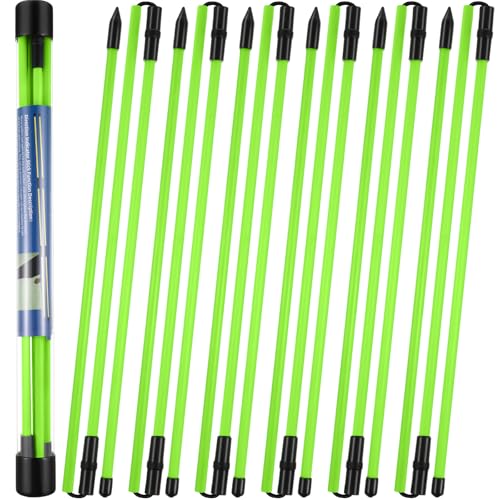


Refine your stance, swing path, and accuracy with the Soulchen 6-Pack Golf Alignment Sticks. Designed for golfers of all levels, these 48-inch collapsible rods are made from durable, lightweight fiberglass and come with a pointed tip for easy ground placement. Perfect for full swings, short shots, putting, and posture correction, these sticks are a versatile training aid for indoor or outdoor use. With a smooth rubber end for safety and a compact carrying tube, they’re easy to store, transport, and practice with wherever you go.
- Versatile Use: Great for improving alignment, swing path, and posture across full swings, putting, and short game.
- Durable & Lightweight: Made of high-quality fiberglass that’s both sturdy and easy to carry.
- Portable Design: Collapsible into three parts and stored in a clear tube case for convenient travel and storage.
- Manual Setup Required: Must be unfolded and placed manually before each use, which may take time during quick practice sessions.
- Not for Club Impact: These rods are not designed for contact with the club—use caution during drills.
- Basic Visual Aid: Provides alignment guidance but does not offer real-time swing feedback like digital aids.
Versatile tools for mastering alignment and swing precision. Use these sticks to create visual references for your swing path, shoulder alignment, and club positioning, helping you build muscle memory and improve your backswing consistency.
4. Scott Edward 12-Inch Golf Swing Training Mirror

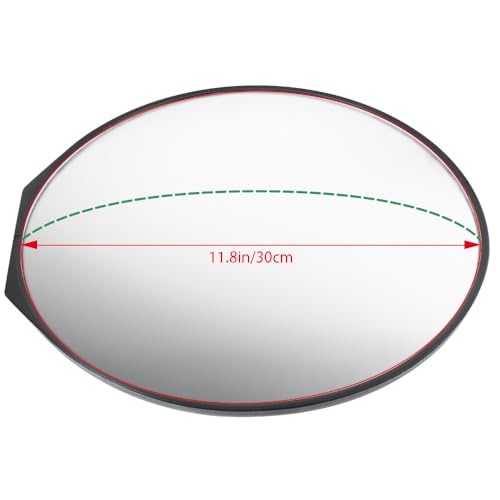

Improve your golf swing posture and body alignment with the Scott Edward 12-Inch Golf Swing Training Mirror. Designed for both beginners and experienced golfers, this shatter-resistant convex mirror provides a wide, 360-degree view of your movement, helping you spot and correct errors in real time. The stepless angle adjustment and foldable stand make it adaptable to various heights and easy to transport. Whether you're practicing at home, in the backyard, or on the driving range, this mirror offers instant visual feedback to refine your swing mechanics.
- 360° Visual Feedback: Large convex mirror helps monitor full-body swing motion for better posture and technique.
- Adjustable & Portable: Stepless angle adjustment and foldable stand make it easy to set up anywhere.
- Durable Design: Shatter-resistant build ensures long-term use during regular practice sessions.
- Limited Use in Windy Conditions: Lightweight design may shift or tip over outdoors without extra support.
- Mirror Requires Cleaning: Reflective surface can smudge or get dirty with outdoor use.
- Not Tech-Enhanced: Lacks digital or motion-tracking features found in more advanced swing aids.
Invaluable for checking setup and swing positions during solo practice. The wide convex view and angle adjustment let you monitor shoulder turn, hip rotation, and club shaft angle—perfect for building consistent mechanics at home or on the range.
My Emotional Journey Into Golf Backswing Mastery
The Moment Everything Changed
Standing on the practice tee that autumn afternoon, watching my ball sail into the woods for the third consecutive shot, I felt a familiar wave of frustration wash over me. But this time was different. Instead of grabbing another ball and repeating the same flawed motion, I stopped. I closed my eyes and tried to feel what was actually happening in my golf backswing.
The revelation was startling – I had no idea where my club was during the first three feet of my takeaway. This simple act of awareness became the foundation of my journey toward backswing mastery, transforming not just my golf game but my entire relationship with learning and improvement.
The Vulnerability of Learning
Learning proper backswing mechanics meant admitting that everything I thought I knew about the golf swing was potentially wrong. For someone who had played golf for over a decade, this humbling realization was both terrifying and liberating. I had to strip away years of muscle memory and start rebuilding from scratch.
The first few weeks were particularly challenging. My scores actually got worse as I focused intensely on backswing fundamentals rather than just trying to hit the ball. Friends questioned why I was “overthinking” such a natural motion, but I knew that without addressing the foundation of my swing, I would forever be trapped in inconsistency.
Three Key Backswing Elements That Transformed My Game
1. The One-Piece Takeaway
The Story Behind the Discovery: My breakthrough with the one-piece takeaway came during a particularly frustrating practice session. I had been lifting the club too early with my hands, creating a steep, narrow backswing that led to over-the-top downswings. A fellow golfer suggested I imagine my arms, shoulders, and club moving as a single unit during the first 18 inches of the backswing.
Detailed Description: The one-piece takeaway involves initiating the backswing with a coordinated movement of the shoulders, arms, and club together. Rather than lifting the club with the hands or turning only the shoulders, everything moves as one connected system. The left shoulder (for right-handed golfers) starts the motion by moving under and around, while the arms maintain their relationship to the chest.
Physical and Emotional Impact: When I finally achieved a proper one-piece takeaway, the feeling was unmistakable – smooth, connected, and powerful. Emotionally, it provided the confidence that comes from knowing your swing was starting correctly. The ball began flying straighter immediately, and the feedback loop of success made practice sessions enjoyable again rather than exercises in frustration.
Overcoming Obstacles: The biggest challenge was overriding years of hand-dominated takeaways. I spent hours in slow motion, focusing solely on the feeling of the shoulders initiating the movement. Using alignment sticks as guides helped me visualize the correct path and maintain the proper connection between my arms and body.
2. Proper Shoulder Turn and Hip Stability
The Inspiration: Watching professional golfers on television, I noticed how their shoulder turn seemed effortless yet created tremendous coil. My own backswing lacked this rotation, instead relying on arm lifting to create the illusion of a full swing. The realization that power comes from the differential between shoulder and hip turn became a game-changer.
Step-by-Step Technique: Proper shoulder rotation in the golf backswing requires the right shoulder to move behind the head while the left shoulder turns under the chin. Meanwhile, the hips should turn roughly half as much as the shoulders, creating torque and stored energy. The key is maintaining spine angle while allowing the shoulders to rotate around this stable axis.
Transformation Results: Developing proper shoulder turn added 20 yards to my drives without any increase in effort. More importantly, it created consistency in my ball striking that I had never experienced. The feeling of coiled energy at the top of the backswing became addictive – like a spring being wound and ready to release.
Integration Challenges: Learning to separate shoulder and hip rotation while maintaining balance required months of dedicated practice. I often over-rotated my hips early in the process, losing the crucial torque that creates power. Practicing with a club across my shoulders helped me feel the correct shoulder movement while keeping my lower body stable.
3. Maintaining Width and Extension
Problem Solved: My natural tendency was to collapse my left arm during the backswing, creating a narrow, weak position at the top. This collapse robbed me of both power and consistency, as the club would be in a different position on every swing.
Technical Breakdown: Maintaining width means keeping the left arm relatively straight (not rigid) while extending away from the body during the backswing. This creates a wide arc and keeps the club on the proper plane. The right elbow should fold naturally while the left arm maintains its extension, creating the classic “triangle” formed by the arms and shoulders.
Physical Sensation: When done correctly, maintaining width creates a feeling of expansion and stretch across the chest and shoulders. It’s like stretching a rubber band – you can feel the potential energy building as you reach the top of your backswing. This sensation became my reference point for knowing when my backswing was complete.
Persistence Through Difficulty: Initially, maintaining width felt awkward and restrictive. My natural instinct was to let the left arm bend for comfort, but this immediately shortened my swing arc and reduced power. Practicing with a headcover squeezed between my left arm and chest helped train the proper feeling of extension.
Common Backswing Challenges and Solutions
Rushing the Takeaway
Many golfers, myself included, tend to start the backswing too quickly, immediately throwing off tempo and sequencing. The solution involves conscious practice of slow, deliberate takeaways, gradually building speed only after the fundamentals become automatic.
Over-Swinging and Loss of Control
The desire to hit the ball farther often leads to backswings that go well past parallel, causing loss of control and inconsistent contact. Learning that a controlled three-quarter backswing often produces better results than an out-of-control full swing was a crucial realization.
Improper Weight Shift
Poor weight distribution during the backswing affects balance and power generation. Many golfers either reverse pivot (weight moves toward the target) or fail to shift weight at all. Proper backswing weight shift involves moving approximately 70% of your weight to the right side (for right-handed golfers) while maintaining spine angle.
Inconsistent Swing Plane
Without proper fundamentals, the club can travel on different planes from swing to swing, making consistent contact nearly impossible. Using training aids and developing feel for the correct plane requires patience and systematic practice.
The Broader Impact on Golf and Life
Mental Game Transformation
Mastering backswing mechanics taught me the value of process over results. Instead of focusing solely on where the ball went, I learned to find satisfaction in executing proper technique. This mindset shift reduced anxiety on the course and made golf more enjoyable.
Patience and Persistence
The months spent rebuilding my backswing developed patience and persistence that extended beyond golf. Learning to trust the process even when immediate results weren’t visible became a valuable life skill applicable to career challenges and personal goals.
Confidence Building
As my backswing became more consistent, confidence permeated other aspects of my golf game. Knowing that my swing started correctly allowed me to be more aggressive with shot selection and course management.
Practical Advice for Your Backswing Journey
Start with Setup Fundamentals
Before working on backswing mechanics, ensure your setup position promotes success. Proper posture, ball position, and alignment create the foundation for a functional backswing. Address position affects everything that follows.
Practice in Slow Motion
Most backswing improvements happen at slow speeds where you can feel and control the movement. Spend significant practice time at 25% speed, gradually increasing tempo only after the motion becomes natural.
Use Video Analysis
Recording your swing from down-the-line and face-on angles provides invaluable feedback on backswing positions. What feels correct often looks different on video, making this tool essential for improvement.
Focus on One Element at a Time
Trying to fix multiple backswing issues simultaneously leads to confusion and frustration. Master one fundamental before moving to the next, allowing each element to become automatic through repetition.
Develop Pre-Shot Routine
A consistent pre-shot routine that includes backswing visualization helps groove proper mechanics on the course. Mental rehearsal of correct positions improves execution under pressure.
Celebrating Small Wins in Backswing Development
Acknowledging Progress
Early in my backswing journey, I learned to celebrate subtle improvements rather than waiting for dramatic breakthroughs. Successfully completing ten consecutive one-piece takeaways deserved recognition, even if my overall swing still needed work.
Tracking Consistency
Keeping a practice journal helped me recognize patterns and progress that might otherwise go unnoticed. Recording the percentage of successful backswings during practice sessions provided motivation and clear improvement metrics.
Sharing Victories
Finding other golfers who understood the technical aspects of swing improvement created opportunities to share successes and learn from their experiences. Golf forums and local instruction groups became valuable support networks.
Overcoming Setbacks and Plateaus
Accepting Temporary Regression
Changing ingrained movement patterns often leads to temporary performance decreases before improvement occurs. Understanding this phenomenon helped me persist through difficult periods when my scores initially suffered.
Seeking Professional Guidance
When self-analysis reached its limits, working with a qualified instructor provided fresh perspectives and accelerated improvement. Professional eyes could identify subtle issues that I couldn’t see or feel.
Maintaining Long-Term Perspective
Backswing mastery is a journey measured in years, not weeks. Accepting this timeline prevented frustration and allowed me to enjoy the process of continuous improvement.
Equipment Considerations for Backswing Development
Club Selection for Practice
Practicing backswing mechanics with different clubs reveals how shaft length and lie angle affect swing plane and positions. Starting with shorter irons often makes it easier to feel proper positions before progressing to longer clubs.
Training Aid Integration
Strategic use of training aids accelerated my backswing development, but avoiding over-reliance on gadgets remained important. The goal was always to develop natural feel that transferred to regular clubs.
Shaft Considerations
Understanding how shaft flex and weight affect backswing timing helped me choose equipment that complemented my developing technique. Properly fitted clubs made it easier to repeat good positions.
The Ongoing Journey
Continuous Refinement
Even after achieving basic backswing competency, ongoing refinement remains essential. Small adjustments based on changing physical conditions, course requirements, or equipment changes keep the swing evolution dynamic.
Teaching Others
Sharing backswing knowledge with other golfers reinforced my own understanding and provided fresh perspectives on common challenges. Teaching forced me to articulate concepts clearly and think about technique from different angles.
Adapting to Age and Physical Changes
As physical capabilities change over time, backswing modifications become necessary. Learning to adapt technique while maintaining fundamental principles ensures continued improvement regardless of age or physical limitations.
Environmental Factors and Course Management
Wind Considerations
Understanding how backswing length and tempo affect ball flight in various wind conditions became crucial for course management. Shortening the backswing in strong winds often produced better results than trying to overpower the conditions.
Pressure Situations
Developing a backswing that remained consistent under pressure required specific mental training and course experience. Tournament play and important matches tested whether practice improvements translated to performance when it mattered.
Different Lies and Situations
Adapting backswing technique for uneven lies, tight fairways, and challenging course conditions expanded my shot-making capabilities and course management options.
Words of Encouragement
Your journey to master the golf backswing will be uniquely yours, filled with discoveries, setbacks, and breakthrough moments that reshape your understanding of the game. The path isn’t always linear – there will be days when everything clicks and others when old habits resurface. This is not only normal but necessary for long-term improvement.
Remember that every professional golfer, regardless of their natural talent, has spent countless hours refining their backswing mechanics. Your commitment to this fundamental aspect of the golf swing demonstrates a serious approach to improvement that will pay dividends far beyond your current imagination.
The beauty of focusing on backswing mastery lies not just in lower scores, but in the deeper appreciation for golf’s complexity and your own capacity for growth. Each practice session becomes an opportunity for discovery, each round a chance to test your progress under real conditions.
Start where you are, use what you have available, and trust the process. Your future self – the one hitting straighter drives, making solid contact, and playing with newfound confidence – is waiting on the other side of dedicated backswing work.
The journey begins with a single, mindful takeaway. Make it count.
Frequently Asked Questions
1. How long should my golf backswing take?
A proper backswing typically takes 1.2 to 1.5 seconds from address to the top of the swing. The key is maintaining consistent tempo rather than rushing or over-deliberating. Practice with a metronome can help develop proper timing, but natural rhythm should ultimately guide your backswing speed.
2. How far back should I swing the club?
Your backswing length should be determined by your flexibility and ability to maintain control. For most golfers, the left arm reaching parallel to the ground (three-quarter swing) provides optimal balance between power and accuracy. Only swing to full parallel or beyond if you can maintain proper positions and control.
3. Should I focus on keeping my left arm straight during the backswing?
The left arm should be extended but not rigid during the backswing. Think “firm” rather than “straight” – some slight bend is natural and acceptable. The key is maintaining consistent extension that creates width in your swing arc. Overly rigid arms can restrict shoulder turn and create tension.
4. What’s the biggest mistake golfers make in their backswing?
The most common error is rushing the takeaway, which disrupts timing and sequencing throughout the entire swing. This often stems from anxiety about hitting the ball rather than trusting the swing process. Starting the backswing slowly and building speed gradually produces much better results.
5. How can I practice my backswing at home?
Mirror work is extremely effective for backswing practice. Focus on your takeaway, shoulder turn, and top-of-swing positions while checking your reflection. Slow-motion swings without a ball help groove proper mechanics. You can also practice with alignment sticks to monitor swing plane and club positions throughout the backswing.