How to Organize a Golf Bag: The Complete Guide for a Cleaner, Faster Round
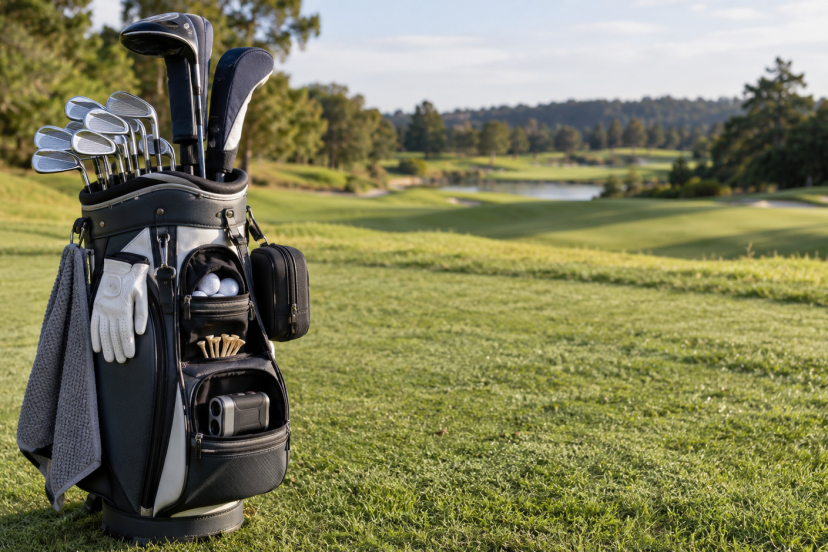
*We may earn a commission for purchases made using our links. Please see our disclosure to learn more.
Knowing how to organize a golf bag may seem like a small detail, but it can make a noticeable difference during a round. A well-organized bag makes clubs easier to find, keeps important accessories within reach, protects expensive equipment, and prevents you from carrying unnecessary weight around the course.
If your golf bag currently contains loose tees, old scorecards, empty ball sleeves, snacks from three rounds ago, and clubs scattered randomly between dividers, you are not alone. Golf bags accumulate clutter surprisingly quickly.
The good news is that organizing one does not require a complicated system. You simply need to give every club and accessory a logical place based on how often you use it.
Whether you use a stand bag, cart bag, carry bag, or 14-way divider bag, this guide will show you exactly how to arrange your clubs, golf balls, tees, gloves, valuables, rain gear, drinks, and other accessories.
“No more than fourteen, but you may carry less if you choose to.”
Source: United States Golf Association (USGA), Rule 4.1b.
Organize Clubs by Length
Arrange your clubs from longest to shortest so they are easy to identify, remove, and return to the correct place.
Keep Essentials Within Reach
Store tees, ball markers, divot tools, and other frequently used accessories in one easy-to-access pocket.
Use a Dedicated Ball Pocket
Keep golf balls in their own compartment instead of mixing them with gloves, tees, and other equipment.
Protect Your Valuables
Use a lined or secure pocket for your phone, wallet, keys, watch, and other personal belongings.
Separate Wet and Clean Gear
Keep damp towels, dirty gloves, and cleaning tools away from clothing, electronics, and other dry items.
Remove Unnecessary Weight
Regularly clear out broken tees, damaged balls, old scorecards, wrappers, and equipment you no longer use.
Build One Consistent System
Give every item a permanent place in your golf bag. A consistent setup makes it easier to find what you need and notice when something is missing.
Four Useful Products for Organizing a Golf Bag
You do not need accessories to create an organized golf bag, but a few well-designed products can make maintaining that system considerably easier.
1. IZZO Golf Plastic Golf Club Tubes


The Izzo Golf Black Plastic Golf Club Tube is designed to keep golf clubs separated, organized, and easier to remove from your bag. Each tube holds one club, helping reduce tangled grips and unnecessary contact between shafts.
- Individual Club Storage: Each tube holds one club, helping prevent grips and shafts from becoming tangled.
- Reinforced Opening: The hard plastic lip helps reduce scuffs and makes clubs easier to insert and remove.
- Flexible Setup: Available in multiple pack sizes and diameters for different golf bag configurations.
- Adds Bulk: Using several tubes can take up more room inside smaller golf bags.
- Plastic Construction: The rigid material may feel less premium than integrated full-length dividers.
- Fit Can Vary: Larger or oversized grips may require the wider tube option.
These individual golf club tubes are particularly useful for bags without full-length dividers.
Each tube creates a separate channel for a club, which helps prevent shafts and grips from tangling inside the bag.
The reinforced plastic lip also helps the club slide in and out more smoothly. Sets are available in different quantities, making it possible to add only the number of dividers you actually need.
Best for: Golfers using older bags or bags with limited internal dividers.
2. VIVA EAGLE Golf Bag Pouch for Balls and Accessories



The VIVA EAGLE Golf Pouch is a spacious organizer designed to keep golf balls, tees, valuables, gloves, rangefinders, snacks, and other small essentials in one convenient place. It features two main compartments, a front pocket, internal zippered sections, and smaller mesh and fabric pockets to help prevent items from becoming mixed together.
- Large Capacity: Multiple compartments provide room for balls, tees, a rangefinder, valuables, snacks, and other essentials.
- Flexible Attachment: The adjustable quick-release strap allows the pouch to attach to golf bags, carts, or other equipment.
- Customizable Storage: The hook-and-loop front panel includes a tee holder and offers space for patches or a golf glove.
- Relatively Bulky: Its larger size may take up more room than a basic golf accessory pouch.
- Extra Features May Be Unnecessary: Golfers who only need storage for tees and balls may not use all of the compartments.
- Limited Phone Size: The front pocket is designed for phones up to approximately 6.5 inches.
Small removable pouches are useful for golfers constantly searching for tees, markers, gloves, or extra balls.
This pouch includes multiple zippered storage areas and a detachable clip, allowing small accessories to remain grouped instead of scattered throughout larger pockets.
Best for: Organizing tees, markers, divot tools, small accessories, and spare balls.
3. STICKIT Magnetic Golf Towel


The STICKIT Magnetic Towel redefines convenience on the golf course with its innovative design. Crafted from high-quality microfiber, this 29" x 29" towel offers superior water absorption, rapid drying, and features deep waffle pockets for efficient groove cleaning. Its standout feature? An industrial-strength magnet that keeps the towel securely attached to your golf equipment or any metal surface, promising on-the-go accessibility.
- Ultimate Convenience: The powerful 25 lb. pull magnet keeps the towel secure on your golf bag or cart, ensuring easy access.
- Premium Quality: Crafted with premium microfiber, this towel absorbs water swiftly, dries fast, and cleans grooves effectively, capturing dirt and debris.
- Versatile and Easy Maintenance: The detachable magnetic patch enables safe washing and drying, while an all-weather silicon patch ensures durability in any weather.
- Limited Surface Compatibility: Relies on metal surfaces or objects for attachment, potentially limiting placement options on the course.
- Weight Consideration: While the magnet provides a strong hold, it adds a slight weight to the towel, which might be noticeable during use.
- Potential Interference: The strong magnet could potentially interfere with sensitive golf equipment or electronic devices if placed too close.
A magnetic towel provides a simple way to keep one of your most frequently used accessories accessible without taking up pocket space.
The STICKIT towel uses a magnetic attachment system and a microfiber waffle-style material designed to help remove dirt and moisture from clubs.
Best for: Golfers who want to keep dirty or wet towels outside their storage compartments.
4. Grooveit The Wet Club Scrub Golf Water Brush


The Grooveit Wet Club Scrub Golf Water Brush is a portable club-cleaning tool designed to help golfers remove dirt, grass, and debris from clubfaces during a round. It combines a built-in water reservoir with a wide nylon-bristle brush head, allowing you to clean grooves without carrying a separate bottle or towel for every job.
- Built-In Water System: Combines water and brushing in one tool for convenient on-course cleaning.
- Magnetic Attachment: The strong magnetic system keeps the brush accessible without digging through bag pockets.
- Wide Brush Head: Nylon bristles cover a larger surface area for faster clubhead cleaning.
- Adds External Bulk: The brush and water reservoir take up additional space on the outside of the bag.
- Requires Refilling: The water chamber needs to be topped up periodically depending on how often it is used.
- Nylon Bristles Only: Golfers who prefer a stiffer metal-bristle option may want a different cleaning tool.
The Grooveit Wet Club Scrub Golf Water Brush combines a built-in water reservoir with a wide nylon-bristle brush head for quick club cleaning during a round. Its anti-leak design helps prevent drips, while the magnetic attachment system keeps it securely connected to the outside of your golf bag and easy to access.
Keeping the brush outside your bag also helps prevent dirt and moisture from getting into pockets with cleaner accessories.
Best for: Golfers who want a convenient, easy-to-reach tool for cleaning clubfaces between shots.
Why Golf Bag Organization Matters
Golf requires concentration. Anything that interrupts your routine can become an unnecessary distraction.
Imagine reaching your ball and needing a 7-iron, only to spend thirty seconds separating tangled club grips. Or arriving at the green and searching through four pockets for your ball marker.
Individually, these moments are minor. Over 18 holes, however, they become frustrating.
A properly organized golf bag can help you:
- Find clubs faster
- Protect club shafts and grips
- Reduce unnecessary bag weight
- Keep accessories from getting lost
- Protect electronics and valuables
- Keep wet and dry equipment separated
- Maintain a more consistent pre-shot routine
Organization is particularly useful for golfers who walk the course because every unnecessary item adds weight.
It can also help before leaving home. When everything has a designated location, checking whether you have enough balls, tees, gloves, or other essentials becomes much easier.
Start by Emptying Your Golf Bag Completely
Before reorganizing your golf bag, remove everything.
And that means everything.
Take out:
- Clubs
- Golf balls
- Tees
- Gloves
- Towels
- Rangefinders
- Ball markers
- Divot tools
- Scorecards
- Rain gear
- Sunscreen
- Snacks
- Water bottles
- Electronics
- Personal belongings
Check every small pocket. Golfers are often surprised by what accumulates inside a bag after several months.
You might discover broken tees, old receipts, damaged gloves, pencils, food wrappers, or dozens of golf balls you forgot you were carrying.
Once the bag is empty, turn it upside down and gently shake out grass, sand, dirt, and debris.
Use a damp cloth to clean the interior of accessible pockets if necessary. Allow everything to dry completely before putting your equipment back inside.
Starting with an empty bag gives you the opportunity to rebuild your organization system intentionally instead of simply moving clutter around.
How to Organize Golf Clubs in a Golf Bag
The most important step is organizing your clubs.
The exact layout depends on the number of dividers in your bag, but one principle works for almost everyone:
Longest clubs toward the back, shortest clubs toward the front.
When the bag is standing upright, the section closest to the carrying strap is typically considered the back.
A common layout looks like this:
Back Section
Place your longest clubs here:
- Driver
- Fairway woods
- Hybrids
These clubs have the longest shafts, so keeping them at the back prevents them from blocking shorter clubs.
Middle Section
Your middle compartments should hold your irons.
A logical progression would be:
- 4-iron
- 5-iron
- 6-iron
- 7-iron
- 8-iron
- 9-iron
You can group longer irons together and shorter irons together depending on your divider configuration.
Front Section
Place your shortest clubs toward the front:
- Pitching wedge
- Gap wedge
- Sand wedge
- Lob wedge
- Putter
This arrangement creates a gradual progression from longest to shortest.
It also means you can scan your bag quickly and identify the club you need.
How to Organize a 4-Way Golf Bag
Four-way divider bags are common among golfers who prefer lighter stand bags.
A simple setup is:
Top compartment:
Driver, fairway woods, and hybrids
Upper-middle compartment:
Long irons
Lower-middle compartment:
Mid and short irons
Bottom compartment:
Wedges and putter
Avoid placing too many clubs in one divider. Crowding causes grips to become tangled and makes clubs more difficult to remove.
How to Organize a 6-Way Golf Bag
A six-divider bag gives you more opportunities to separate clubs.
Try:
- Driver
- Fairway woods and hybrids
- Long irons
- Mid irons
- Short irons
- Wedges and putter
You can modify the arrangement depending on which clubs you carry.
For example, golfers carrying multiple hybrids may want to dedicate one section specifically to them.
How to Organize a 14-Way Golf Bag
A 14-way golf bag is perhaps the easiest to organize because nearly every club receives its own slot.
The simplest layout follows club length:
- Driver
- Fairway wood
- Fairway wood or hybrid
- Hybrid or long iron
- Long iron
- Mid iron
- Mid iron
- Mid iron
- Short iron
- Short iron
- Pitching wedge
- Gap wedge
- Sand/lob wedge
- Putter
One major advantage of individual slots is that missing clubs become easier to notice.
If you leave your wedge beside a green, the empty divider can immediately alert you that something is missing.
Where Should the Putter Go?
Putter placement varies because golf bags are designed differently.
Some bags have a dedicated external putter well. If yours does, use it.
Otherwise, keeping your putter with the wedges generally works well because these clubs are frequently used around the green.
Golfers with oversized putter grips may find that the grip fits poorly inside narrow divider systems. In that situation, use the widest available divider or dedicated putter section.
Avoid forcing oversized grips into small compartments because repeated friction can damage them.
Organize Golf Balls in Their Own Pocket
Golf balls should have one dedicated pocket.
Keeping them separate prevents you from digging through tees, gloves, and accessories whenever you need another ball.
Most golfers do not need to carry several dozen balls.
Depending on your playing ability and confidence, around six to twelve golf balls is usually enough for a normal recreational round.
Beginners who tend to lose more balls may understandably want extras.
Periodically remove:
- Badly scuffed balls
- Cracked balls
- Practice-only balls
- Balls you never intend to play
Carrying unnecessary golf balls simply adds weight.
Create a Dedicated Tee and Small-Accessory Pocket
Small accessories are among the easiest golf items to lose.
Choose one accessible pocket for:
- Tees
- Ball markers
- Divot repair tool
- Golf pencil
- Sharpie
- Small groove tool
If your golf bag includes smaller organizational compartments, use them.
Otherwise, a small accessory pouch can prevent tiny items from disappearing into the bottom of a large pocket.
Try not to carry an entire season’s supply of tees during every round. A reasonable handful is usually sufficient.
Keep Your Golf Glove Accessible
Your glove should be easy to reach before teeing off.
Many golfers place their glove in an upper accessory pocket or attach it externally using a glove holder.
After playing, avoid immediately storing a wet glove inside an airtight pocket.
Moisture can cause unpleasant odors and shorten the glove’s useful life.
Instead, allow it to air dry whenever possible.
Some golfers rotate between two gloves during particularly hot or humid rounds.
Keep Valuables in a Protected Pocket
Phones, wallets, watches, car keys, earbuds, and other valuables should never share a compartment with golf balls, tees, or metal tools.
Use your bag’s:
- Velour-lined pocket
- Waterproof valuables pocket
- Soft-lined pocket
- Internal zippered compartment
Whenever possible, choose a zipped pocket.
Your valuables should also be protected from rain. Even water-resistant pockets may not remain completely dry during prolonged heavy weather, so a small waterproof pouch can offer additional protection.
Where to Put Your Rangefinder
A rangefinder should be accessible without being vulnerable to damage.
Good locations include:
- Dedicated rangefinder pocket
- Padded accessory pocket
- Magnetic cart attachment
- Protective rangefinder case
Avoid storing your rangefinder loosely alongside golf balls.
Repeated impacts between golf balls and electronic equipment are unnecessary.
Develop the habit of returning the rangefinder to the same location after every shot. Rangefinders are among the easiest accessories to accidentally leave behind.
Store Your Golf Towel Outside the Bag
Golf towels are designed to get wet and dirty.
For that reason, they should generally remain outside the bag rather than inside a clean storage pocket.
Attach your towel to:
- Towel ring
- Carabiner
- Bag loop
- Magnetic towel attachment
Keeping the towel external allows it to dry between uses and prevents dirt or moisture from spreading to clothing and equipment.
Use the Large Apparel Pocket for Clothing
Most golf bags contain at least one large side pocket designed for clothing.
Use it for items such as:
- Lightweight rain jacket
- Pullover
- Extra socks
- Sun sleeves
- Small rain pants
Try not to fill this compartment with equipment you rarely use.
Bulky clothing adds considerable weight, particularly for golfers carrying their bags.
Check the weather forecast before leaving and pack accordingly.
Keep Food and Drinks Separate
Snacks and beverages should have their own compartment whenever possible.
Many modern golf bags include insulated drink pockets.
Use them for:
- Water
- Sports drinks
- Small snacks
Avoid placing drinks near phones or other electronics.
A leaking bottle can quickly turn a tidy golf bag into a serious problem.
Choose resealable food containers rather than loose packaging, especially when carrying fruit, sandwiches, or energy snacks.
Where Should an Umbrella Go?
If your bag has an external umbrella sleeve or strap, use it.
Storing a wet umbrella inside the main compartment can introduce moisture into the bag and potentially affect grips, towels, clothing, and other equipment.
Allow umbrellas to dry fully after your round before putting the bag into storage.
What Not to Carry in Your Golf Bag
Organization is partly about deciding what belongs in your bag and partly about removing what does not.
Common unnecessary items include:
- Excessive golf balls
- Dozens of broken tees
- Old scorecards
- Empty packaging
- Multiple unused gloves
- Outdated yardage books
- Large quantities of coins
- Expired snacks
- Multiple towels
- Equipment you have not used in months
If you regularly walk the golf course, unnecessary weight becomes particularly noticeable.
A lighter golf bag can make the back nine considerably more comfortable.
Organize Your Bag Based on How Often You Use Each Item
An effective organization system follows a simple rule:
Frequently used equipment should be easiest to access.
High-Frequency Items
Keep these easily accessible:
- Golf balls
- Tees
- Rangefinder
- Ball marker
- Divot repair tool
- Glove
- Towel
Medium-Frequency Items
These can be placed in secondary pockets:
- Sunscreen
- Snacks
- Extra glove
- Sunglasses
- Bug spray
Emergency or Low-Frequency Items
Place these in larger or less accessible compartments:
- Rain jacket
- First-aid supplies
- Spare socks
- Additional clothing
If you only use something once every few rounds, it should not occupy your easiest-to-reach pocket.
Adjust Your Organization for a Cart Bag vs. Stand Bag
The ideal setup changes slightly depending on the type of bag.
Cart Bag
Cart bags typically provide:
- More pockets
- More storage capacity
- More dividers
- Larger insulated sections
Because weight is less important when riding, you can carry additional clothing, balls, accessories, and drinks.
However, avoid overpacking simply because space is available.
Make sure frequently used pockets face outward when the bag is strapped to the cart.
Stand Bag
Stand bags prioritize portability.
Keep them lighter by carrying only what you expect to use.
Pay particular attention to weight distribution. Heavy objects placed unevenly can make the bag uncomfortable when walking.
Place heavier items close to the center of the bag rather than filling one outer pocket.
Create a Pre-Round Golf Bag Checklist
Once your golf bag is organized, use a quick checklist before every round.
Clubs
Confirm your intended clubs are present and make sure you are within the permitted limit. The USGA allows golfers to carry up to 14 clubs.
Golf Balls
Make sure you have enough for the round.
Tees
Carry both driver tees and shorter tees if you use different sizes.
Golf Glove
Check its condition and pack a backup if necessary.
Rangefinder or GPS
Charge electronic devices beforehand.
Towel
Attach it to the outside of the bag.
Divot Tool and Ball Marker
Keep both in your designated accessory pocket.
Water and Snacks
Pack enough based on weather and round length.
Weather Equipment
Add sunscreen, rain gear, or extra layers when conditions require them.
Reorganize Your Golf Bag After Every Few Rounds
Even the best organization system gradually breaks down.
Every three to five rounds, take a few minutes to inspect your bag.
Remove:
- Trash
- Broken tees
- Damaged balls
- Food wrappers
- Old scorecards
- Empty bottles
Check whether your rain gear is dry and whether your gloves need replacing.
Also inspect pockets for sand, grass, dirt, and moisture.
Doing this regularly prevents the major cleanout that becomes necessary when a golf bag has been ignored for an entire season.
A Simple Golf Bag Organization System
If all of these recommendations seem like a lot to remember, use this basic formula:
Top: Woods and hybrids
Middle: Irons
Bottom: Wedges and putter
Ball pocket: Golf balls only
Small pocket: Tees, markers, and divot tool
Protected pocket: Phone, wallet, and keys
Large side pocket: Clothing and rain gear
Insulated pocket: Drinks and snacks
Outside attachments: Towel, umbrella, and cleaning tools
Once you become accustomed to this system, finding equipment becomes almost automatic.
Final Thoughts
Learning how to organize a golf bag is less about creating a perfect-looking setup and more about making every piece of equipment easy to find when you need it.
Start with your clubs by arranging them from longest to shortest. Give golf balls, tees, valuables, clothing, and drinks their own designated compartments. Keep wet or dirty accessories such as towels and cleaning brushes outside whenever possible.
Most importantly, remove unnecessary equipment regularly.
Your golf bag should contain what helps you play, not everything you have ever brought to a golf course.
Once every item has a permanent location, packing before a round becomes faster, equipment becomes easier to locate, and you can spend less time digging through pockets and more time focusing on your next shot.
Frequently Asked Questions
1. What is the best way to organize clubs in a golf bag?
The simplest method is to arrange clubs from longest to shortest. Place the driver, fairway woods, and hybrids toward the back or top of the bag, irons in the middle, and wedges and putter toward the front or bottom. The exact arrangement can be adjusted depending on whether your bag has 4, 6, or 14 dividers.
2. How do you organize a 14-slot golf bag?
Give each club its own slot and arrange the clubs roughly by shaft length. Start with the driver and woods at the back, followed by hybrids and irons, then wedges and the putter toward the front. A consistent order also makes it easier to notice when a club has accidentally been left behind.
3. How many golf balls should I keep in my golf bag?
Many recreational golfers will be comfortable carrying approximately six to twelve golf balls. Beginners or golfers playing courses with significant water, woods, or other hazards may prefer carrying more. Avoid carrying several dozen unless necessary because golf balls add considerable weight.
4. Where should the putter go in a golf bag?
Use a dedicated putter well if your bag has one. Otherwise, the putter can normally be stored with the wedges in the front section of the bag. Golfers using oversized putter grips should choose a wider divider to prevent unnecessary friction or grip damage.
5. What should every golfer keep in their golf bag?
Useful essentials include your selected clubs, golf balls, tees, a golf glove, ball marker, divot repair tool, towel, water, sunscreen, and a pencil or scoring tool. Depending on the weather and course, you may also want a rangefinder, rain jacket, umbrella, snacks, spare glove, and extra layer of clothing.